
The Best Cladding for a Garden Room: Ideas to Take It From Shed to Sanctuary
Featured Partner Post
A garden room can look like a finished part of the home if you elevate it with cladding. Choose your cladding well, and a simple garden office, studio or retreat becomes a space with real presence (choose badly, and you may be dealing with warped boards, constant re-treating, or a finish you stop liking long before the structure itself has aged).
While there’s nota single ‘best’ cladding type for a garden room, Cedar, Siberian larch, Thermowood, Accoya, charred timber, composite and fibre cement all earn their place for different reasons. Some win on warmth and natural grain, others on low maintenance, while some, like charred timber, are chosen because they turn a plain box into something sharper, darker and more architectural.
This guide compares the main garden room cladding options by look, lifespan, upkeep and cost, so you can choose a finish that suits your building, your budget, and the way you actually want to use the space.
Best Timber and Wood Cladding for Garden Rooms
Natural timber remains the most popular route for garden rooms because it brings warmth, grain and character that few other materials match. The species you pick will need to depend on maintenance, budget and the look you're after.
Four species lead the field for UK garden rooms:
Western Red Cedar is the popular classic, prized for its warm tone.
Siberian larch is the value workhorse, dense and durable for the price.
Thermowood offers the most stability.
Accoya carries the longest warranty.
Every natural timber weathers the same way if left uncoated - the surface silvers to an attractive grey patina over time, or you can hold the original colour by oiling periodically. Species durability is graded under the EN 350 standard, which rates timber from Class 1 (very durable) to Class 5 (not durable) for exterior use. This rating tells you how well a board resists decay before any treatment is applied.
Each species suits different priorities, so the comparison below breaks down durability, lifespan and the look you can expect:
Cedar vs Siberian Larch vs Thermowood vs Accoya
Matching the timber to your site and maintenance appetite matters more than chasing one ‘best’ board.
Western Red Cedar is the default choice for garden offices thanks to its warm tone and natural durability. Canadian cedar rates EN 350 Class 2 (Durable) with an indicative service life of around 60 years, while British-grown cedar sits at Class 3 with roughly 30 years. It can be left to silver or oiled to hold colour.
Siberian larch offers the best value natural look. It is dense (~628 kg/m³) and rated EN 350 Class 3, lasting about 20–30 years untreated or 50+ with maintenance. Left uncoated, it weathers to a silver-grey patina over roughly 12–24 months.
Thermowood is heated to around 212°C in steam, which lowers moisture content and improves dimensional stability and decay resistance. The result is a uniform brown colour with minimal movement, making it ideal for exposed elevations where ordinary timber would cup or swell.
Accoya is acetylated modified timber carrying a 50-year above-ground warranty and the top Class 1 durability rating. Acetylation cuts shrink and swell by 70–80%, making it the lowest-worry premium option.
To summersie, choose cedar for the classic warm look, Siberian larch for value, Thermowood for stability, and Accoya for the longest warranty.
Cladding Profiles: Shiplap, Shadow Gap and Feather Edge
Profile shapes both the look and how the boards handle rain:
Shiplap overlaps along each board so water sheds cleanly, making it a reliable all-rounder.
Shadow gap sets a recessed channel between boards, creating the crisp, contemporary line favoured on modern garden offices.
Feather edge tapers each board for a traditional, overlapping finish.
Board-on-board layers two courses for depth and texture, while smooth PSE (planed square edge) gives a flat, minimal face for clean architectural designs.
Most boards come in widths of roughly 95, 120 and 145 mm and lengths of 2, 3 or 4 m, so you can estimate board counts once you know your wall area. A board calculator removes the guesswork before ordering.
Orientation matters too. Horizontal cladding reads wider and more modern, while vertical cladding draws the eye upward and sheds water quickly as rain runs straight down the boards. Both work well, depending on the elevation and the effect you want.
Charred Timber (Shou Sugi Ban): The Design-Led Sanctuary Finish
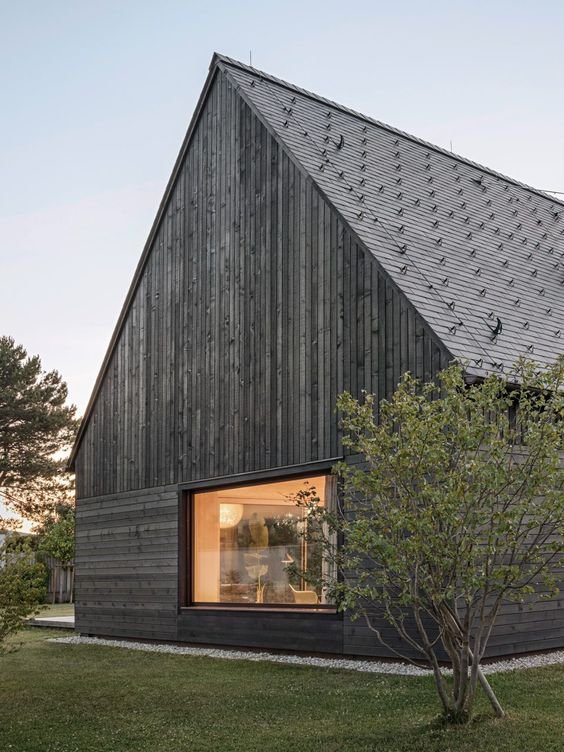
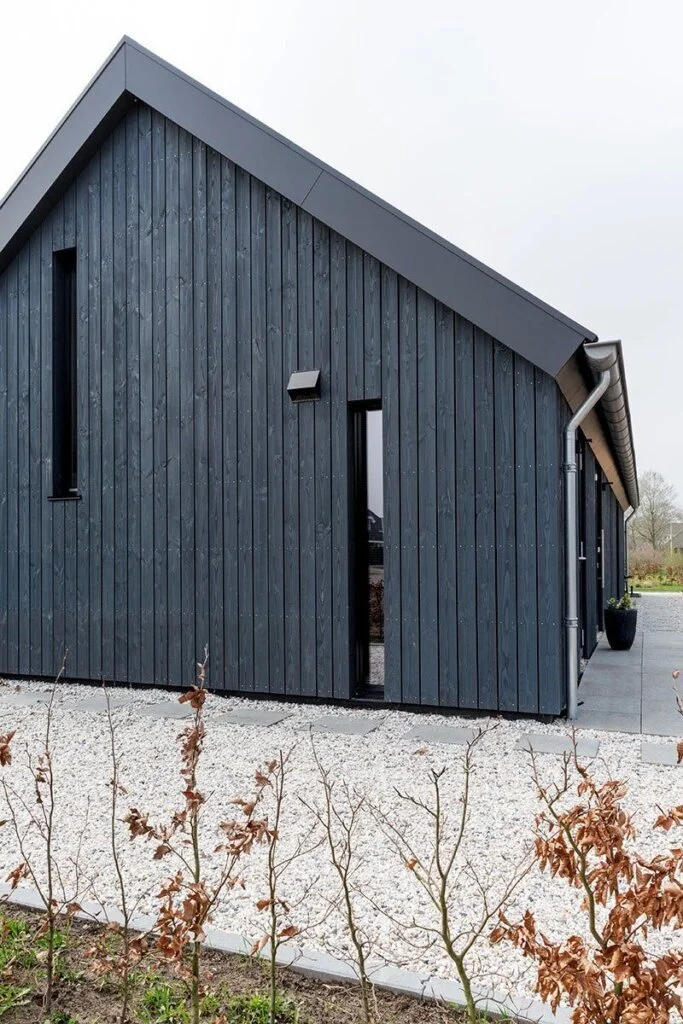
Charred timber turns a plain shed into a sanctuary like no other finish, thanks to a dramatic black-to-silver surface with real depth and texture. This is the most design-led route for a garden room that should feel intentional, not utilitarian.
The Japanese Yakisugi (Shou Sugi Ban) technique works through controlled surface charring, building a protective carbon layer on the board. The timber is then brushed and oil-finished to set the look, so the char doesn't rub off in normal handling or use.
The protection is measurable - in a 9-week fungal test, unmodified wood lost up to 60% (birch) and 56% (spruce) of its mass, versus 23% and 32% for charred samples. Results vary because performance depends on char depth, method and species, so detailing matters.
Maintenance stays low - left uncoated, brushed char weathers to a silver-grey patina over roughly 5–10 years. To hold the colour, re-oil every 3–5 years on exposed elevations or 5–10 years when sheltered, with no sanding or stripping required.
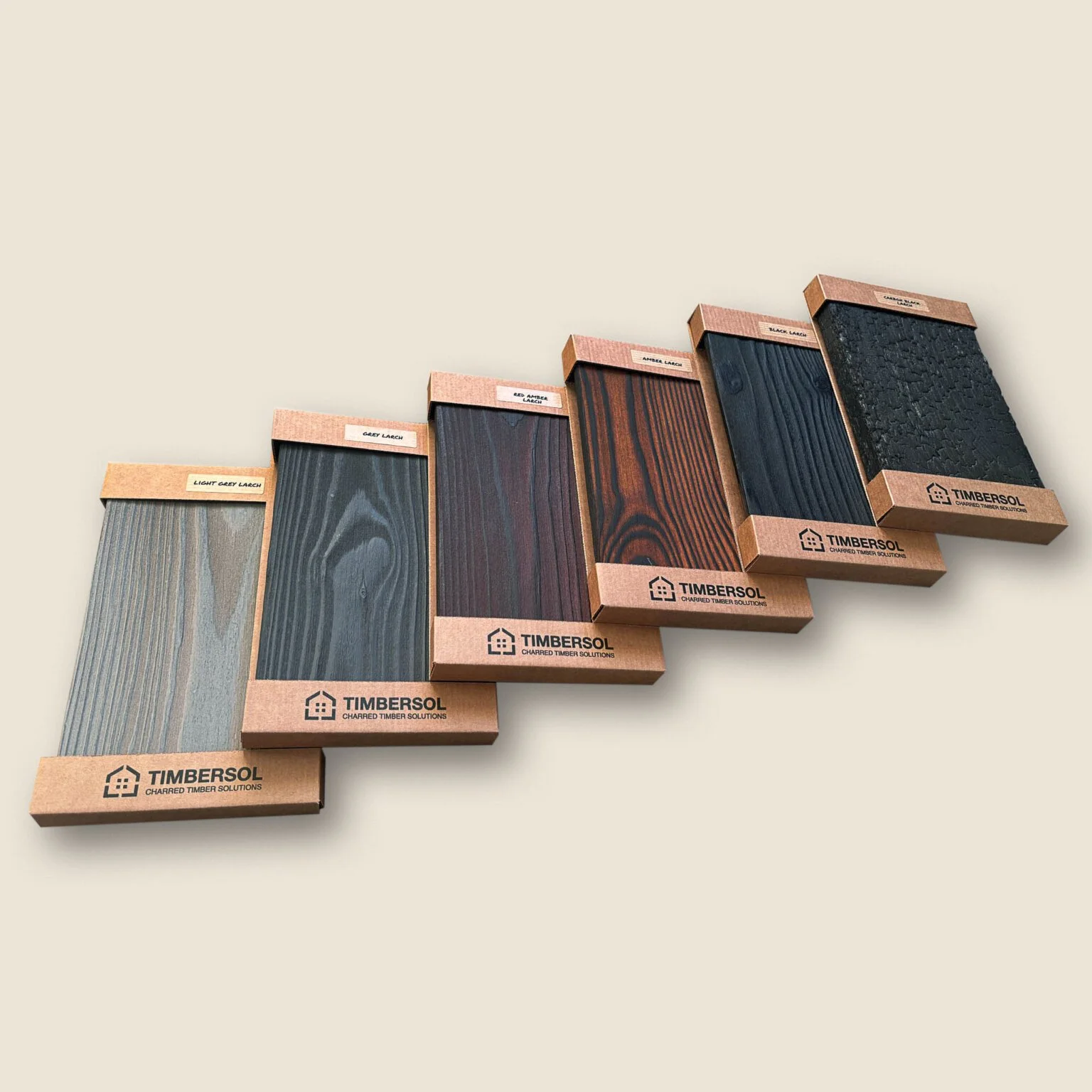
Charring layers onto species already proven for cladding: larch, spruce, cedar, Thermowood, Accoya, oak and Douglas fir, so you keep each timber's natural strengths and gain a contemporary aesthetic on top.
You can explore the full range of charred cladding from TimberSol, then order a sample as a low-commitment first step to judge the shade and texture against your own building.
Composite Cladding for Garden Rooms: The Low-Maintenance Option
Composite cladding combines wood fibre with recycled plastic, typically around 55–60% recycled wood and 40% HDPE plus stabilising additives. This blend resists rot, mould and insect attack because it lacks the open cellular structure that lets natural timber absorb water.
The appeal is simple - no repainting. Composite boards usually last 20–30 years, and up to roughly 50 with a careful install, while needing only a wash once or twice a year to stay looking fresh. However, that low upkeep comes with trade-offs: composite carries a higher upfront cost than most softwood and even some natural-timber options, and the finish never quite replicates real grain or the way wood silvers over time.
For buyers who value minimal maintenance above an authentic timber look, composite is a sound choice. But if grain, depth and weathering character matter to you, a natural or charred board will reward the effort. Order samples of both before committing, since photographs rarely show the difference fairly.
Fibre Cement Cladding for Garden Rooms
Fibre cement boards combine cement, cellulose fibres and sand into a hard, dimensionally stable panel that resists rot, insects and weather. Trade sources cite a service life of up to 50 years, since the material neither absorbs water like timber nor flexes through wet-dry cycles.This stability makes it a genuinely low-maintenance option. The boards come in woodgrain-effect and smooth finishes, so you can mimic the lines of timber or a flat contemporary panel, though painted surfaces typically need refreshing every 5–10 years to keep colour fresh.
Fibre cement performs best on the toughest sites. Coastal and exposed locations expose natural timber to driving rain and salt, which accelerate decay, whereas fibre cement shrugs both off because it is non-porous and chemically inert.
The trade-off is honesty about looks - fibre cement cannot replicate real timber grain or the way wood silvers over time, but it suits buyers who prioritise durability and minimal upkeep over an authentic wood finish.
What Is the Cheapest Way to Clad a Garden Room?
Treated softwood -such as feather edge or shiplap boards - paired with DIY installation gives the cheapest upfront route. Softwood profiles sit at the lower end of the price range, while fitting the boards yourself removes the biggest variable cost.
Indicative 2026 trade pricing helps set expectations. Premium timber runs around £75–£130+/m², charred timber around £75–£150/m², while budget composite and feather edge fall at the cheaper end. Labour typically adds £20–£35/m² on top. But, the lowest upfront price rarely wins over the building's life - cheap softwood needs frequent re-treating and earlier replacement because it absorbs moisture and decays faster, so the long-term cost often overtakes a durable species fitted once.
Smarter savings come from choosing a species you can leave to silver naturally, which removes recurring coating costs. A board calculator prevents over-ordering, and ordering timber samples before committing avoids costly mistakes on the wrong shade or profile.
For larger jobs, finance can spread the cost of a higher-grade, longer-lasting cladding, making a durable material affordable without compromising on quality from the start.
Which Cladding to Avoid for a Garden Room
Untreated or low-grade softwood is the material to avoid, because it warps, splits and rots quickly in the damp UK climate. Without a durable species or proper treatment, those boards fail within a few years and cost more to replace than a better choice would have cost upfront.
Installation detailing matters just as much as the board itself - poorly draining profiles and flush, tight installations trap water against the timber, which accelerates decay because the surface never dries out fully between wet spells. Thin, cheap boards add another risk, as they cup and twist as moisture cycles in and out, pulling away from fixings and opening gaps that let more water behind the cladding.
The danger sharpens on exposed or damp-microclimate sites, where a more durable species or modified timber repays the extra spend. So, match the material, profile and install detail to your site rather than chasing the lowest price, since the cheapest board rarely lasts the building's life.
Planning Permission and the 2.5m Rule
A garden room usually counts as permitted development when it is single-storey, sits behind the principal elevation of the house, and covers no more than half the garden area. Height limits decide the rest - if the building stands within 2 m of a boundary, total height must not exceed 2.5 m. Beyond that distance, eaves cap at 2.5 m, while overall height reaches 4 m for a dual-pitch roof or 3 m for other roofs (these rights do not apply to listed buildings or flats, and any sleeping accommodation needs full planning permission). Cladding choice rarely affects approval, since height and siting drive the rules, not the finish, but always check the Planning Portal before building.
Best Cladding for a Garden Room: FAQ
What Is the Best Cladding for a Garden Room?
The best cladding depends on your maintenance appetite, budget and the look you want. For the lowest upkeep, composite or fibre cement resist rot and need only an occasional wash.
For a natural finish, Western Red Cedar, Siberian larch, Thermowood or Accoya each suit different priorities, from warm tone to maximum stability.
For the most striking sanctuary aesthetic, charred timber delivers a dramatic black-to-silver surface that no painted board can replicate.
What Is the Cheapest Way to Clad a Garden Room?
Treated softwood profiles, such as feather edge or shiplap, fitted yourself give the cheapest upfront route because softwood sits at the bottom of the price range and DIY removes labour costs. Cheap softwood needs frequent treating and earlier replacement, so a durable species left to silver often works out cheaper across the building's life.
What Cladding Should You Avoid for a Garden Room?
Untreated or low-grade softwood is the material to avoid, because it warps, splits and rots quickly in the damp UK climate. Poorly draining profiles and flush, water-trapping installations accelerate decay. The risk rises further on exposed or damp-microclimate garden sites, where a modified or naturally durable timber pays off.
How Much Does It Cost to Clad a Garden Room?
Materials typically range from roughly £500 to £3,500 depending on species, finish and the size of the building. Premium timber sits around £75–£130 per m², while charred timber runs about £75–£150 per m², with labour adding roughly £20–£35 per m². A durable, well-chosen cladding offsets this through years of reduced maintenance.

The garden trends that you need to know about!