
How to Pair Wall Panelling with Wallpaper
Featured Partner Post
Wall panelling has become one of the most popular DIY home projects to undertake. Many people love to add panelling as it adds character to plain modern rooms, hides imperfect walls, and can be done over a weekend with some MDF, a mitre saw, and a bit of patience. Once the panelling is up, often the next question is what to do with the wall above it. While paint is the obvious answer, wallpaper can be a more interesting one!
Combining the two is a classic look that goes back centuries, but it is also very easy to get wrong. Here’s how to make panelling and wallpaper work together in a way that feels balanced rather than busy:
Get the height right first
The single biggest factor in how panelling and wallpaper look together is where the line between them falls. Traditionally, a dado rail sits at roughly a third of the wall height, keeping the proportions comfortable in most rooms. In a room with a standard ceiling height, this usually puts the top of the panelling somewhere around waist to hip height.
Taller panelling, sometimes running up to two thirds of the wall, has become popular in recent years and can look striking - especially in dining rooms and bedrooms. If you go higher, keep the wallpaper above it calmer, because the band of pattern will be narrower and more concentrated.
What tends to look awkward is panelling that stops exactly halfway up the wall; it splits the room into two equal parts, and neither the panelling nor the paper gets to lead.
Choose which element is the star
Panelling and wallpaper both add texture and interest, so one of them needs to take the lead. If your panelling is detailed with lots of beading, small boxes, or a Jacobean grid, it is already doing a lot of visual work. In that case, a quieter wallpaper with a small-scale pattern or a subtle texture works best above it.
If your panelling is simple (such as plain shaker style or tongue and groove), it acts more like a frame. This gives you room to choose a bolder, more decorative paper above.
Link the colours
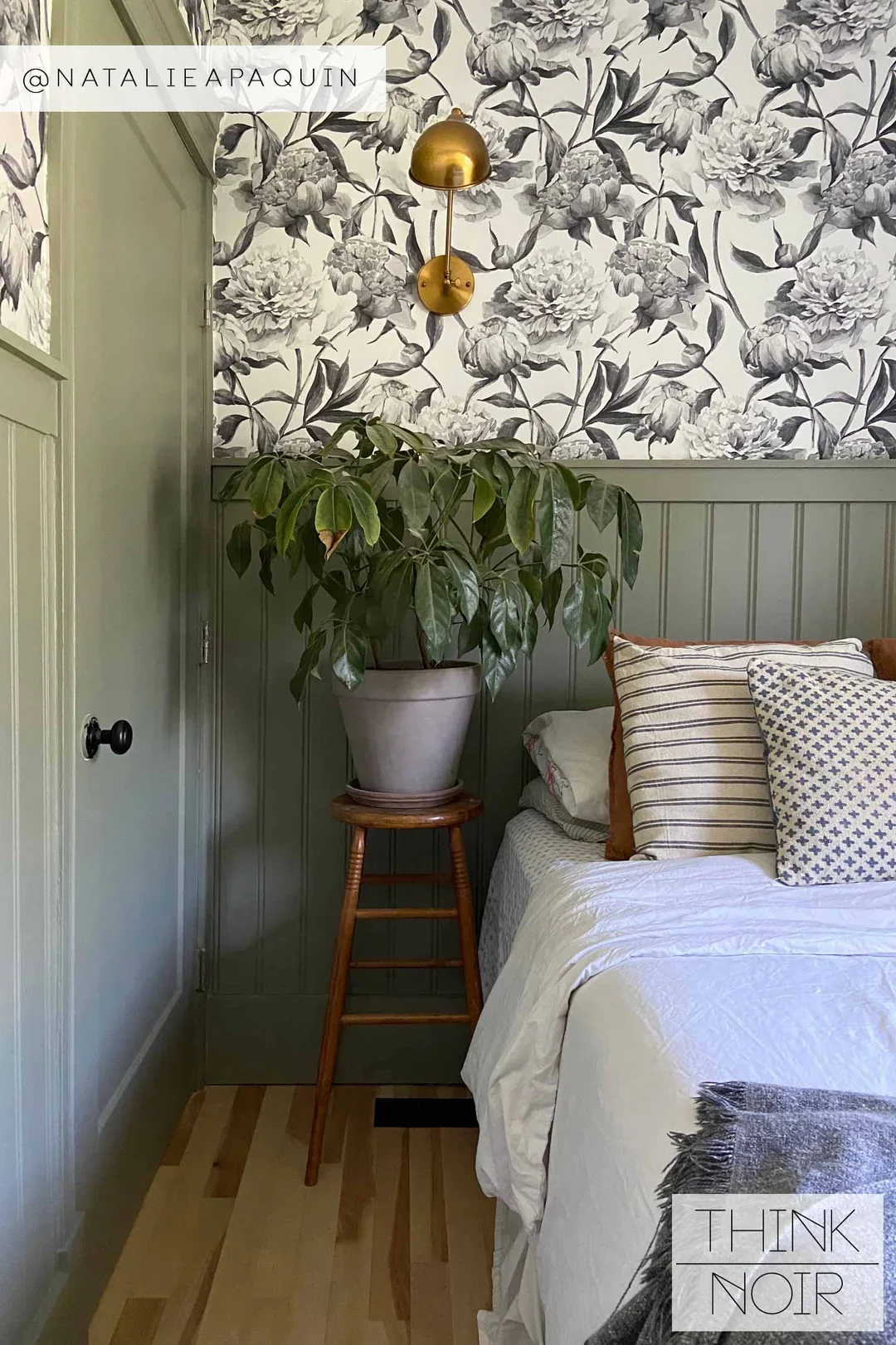
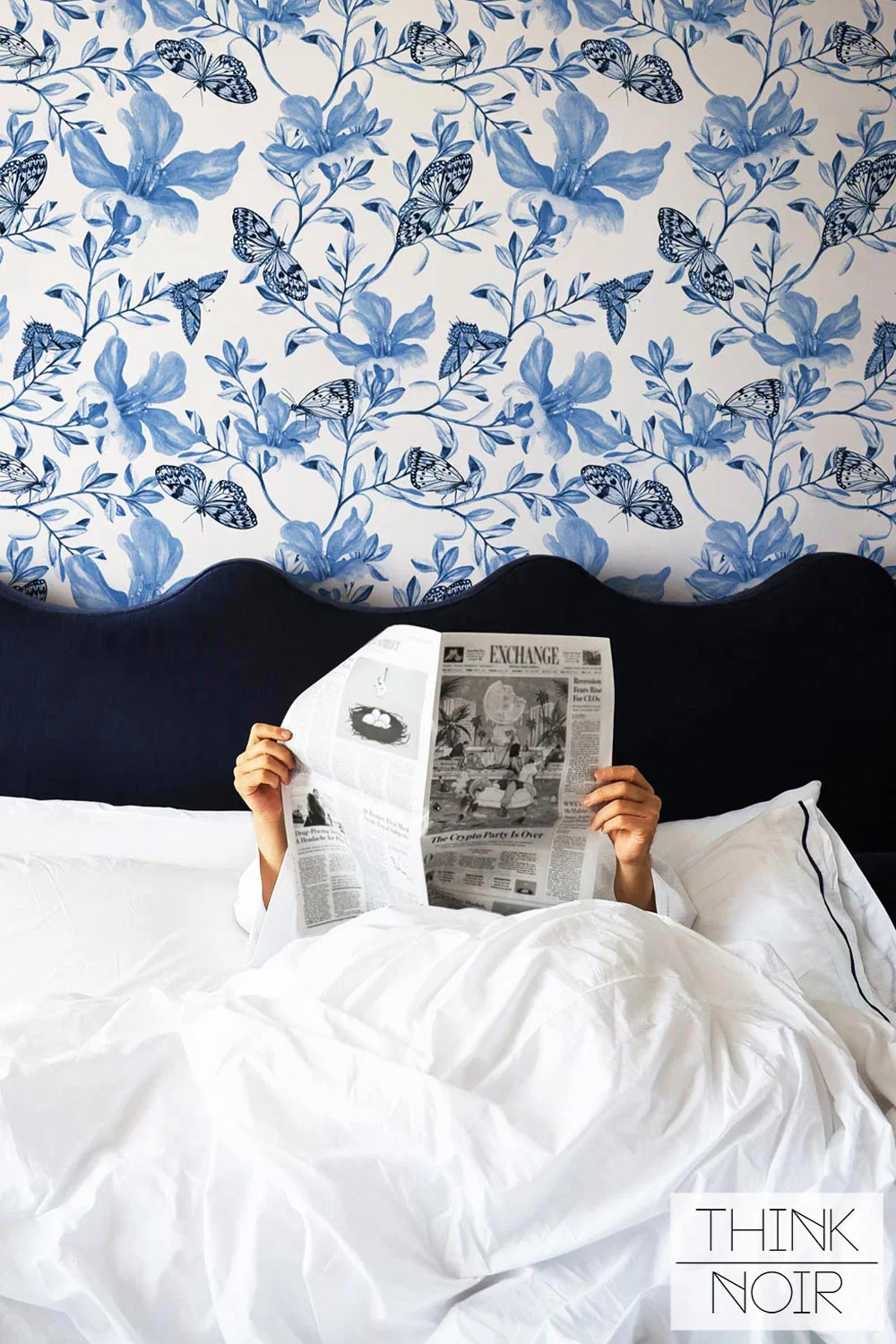
The quickest way to make the two feel like they belong together is to connect them through colour. Pick one of the shades in the wallpaper and use it (or a slightly deeper version of it) on the panelling. A green leaf print above sage panelling, or a blue and white pattern above a soft navy, instantly looks intentional.
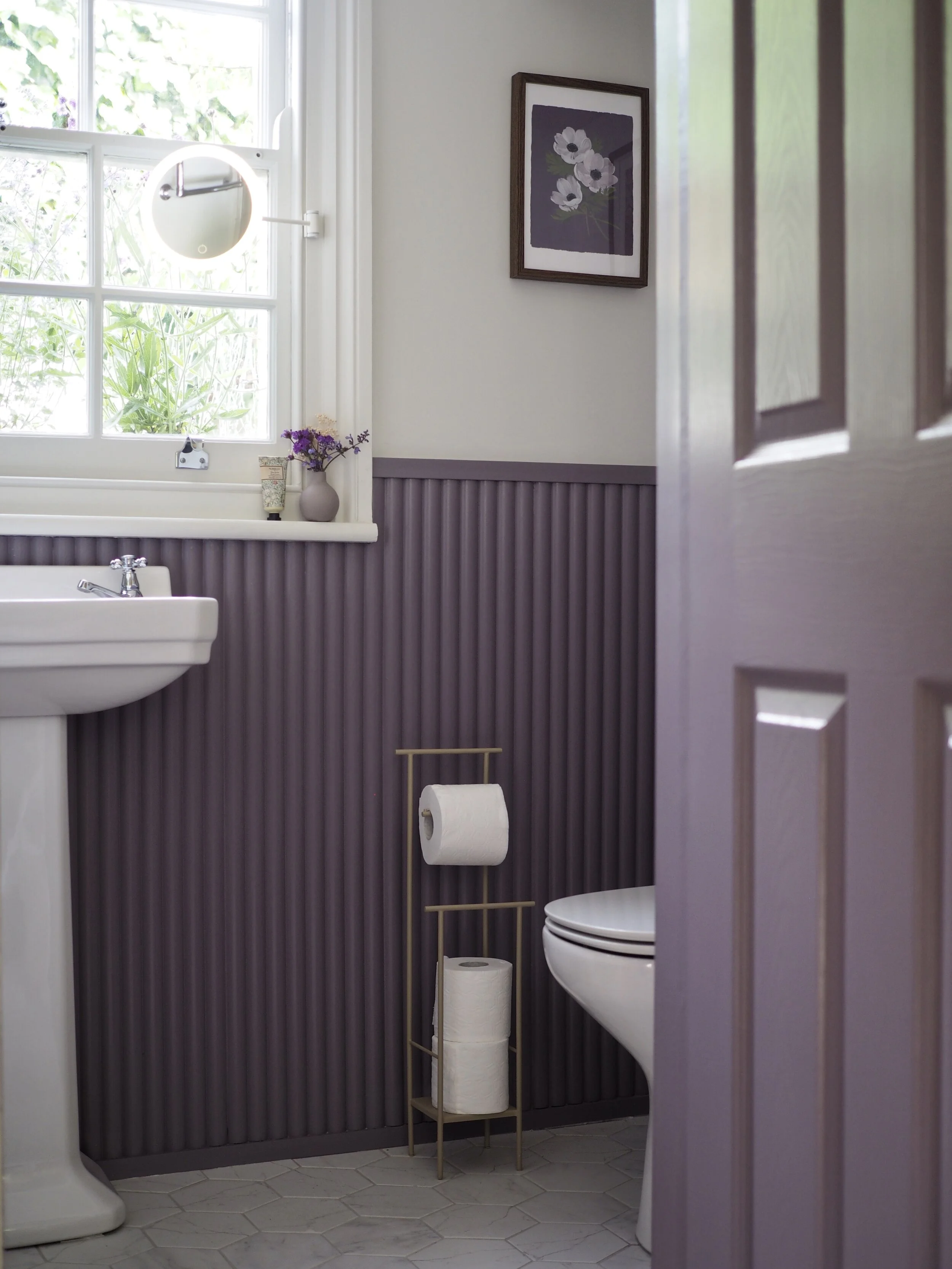
It is also worth considering colour drenching, where the panelling, skirting, door frames, and even the ceiling are all painted in the same shade. With a coordinating wallpaper above, this creates a cosy, wrapped-in feeling that suits snugs, bedrooms, and dining rooms particularly well.
For a lighter look, keep the panelling a soft neutral and let the wallpaper carry the colour.
Patterns that work well above panelling
Some patterns are naturally suited to sitting above panelling. Traditional stripes have a long history in this kind of scheme and they draw the eye upwards, which helps in rooms with lower ceilings. Small geometrics feel neat and tailored, while botanical and leafy designs soften the straight lines of the panelling.
Florals are perhaps the most classic choice of all; they bring to mind country houses and cottage interiors, where painted lower walls and patterned upper walls have been used together for generations. A floral wallpaper with a medium-scale repeat sits comfortably above both shaker and beaded panelling and it adds warmth that plain paint cannot match. If you love the look but want something more contemporary, choose a floral with a darker background or a more painterly, loose style.
Whatever you choose, look at the scale. Very large patterns can feel cut off in the band above panelling because you only see part of each repeat. Small and medium designs usually sit more comfortably.
Where the combination works best
Hallways are a natural fit, because the lower half of the wall takes the most knocks from bags, shoes, and pushchairs. Panelling protects it, and wallpaper above adds personality to a space that is often overlooked.
Dining rooms are another favourite: higher panelling with a decorative paper above creates a lovely, enclosed atmosphere for evening meals. In bedrooms, panelling behind the bed with wallpaper above can replace a headboard entirely.
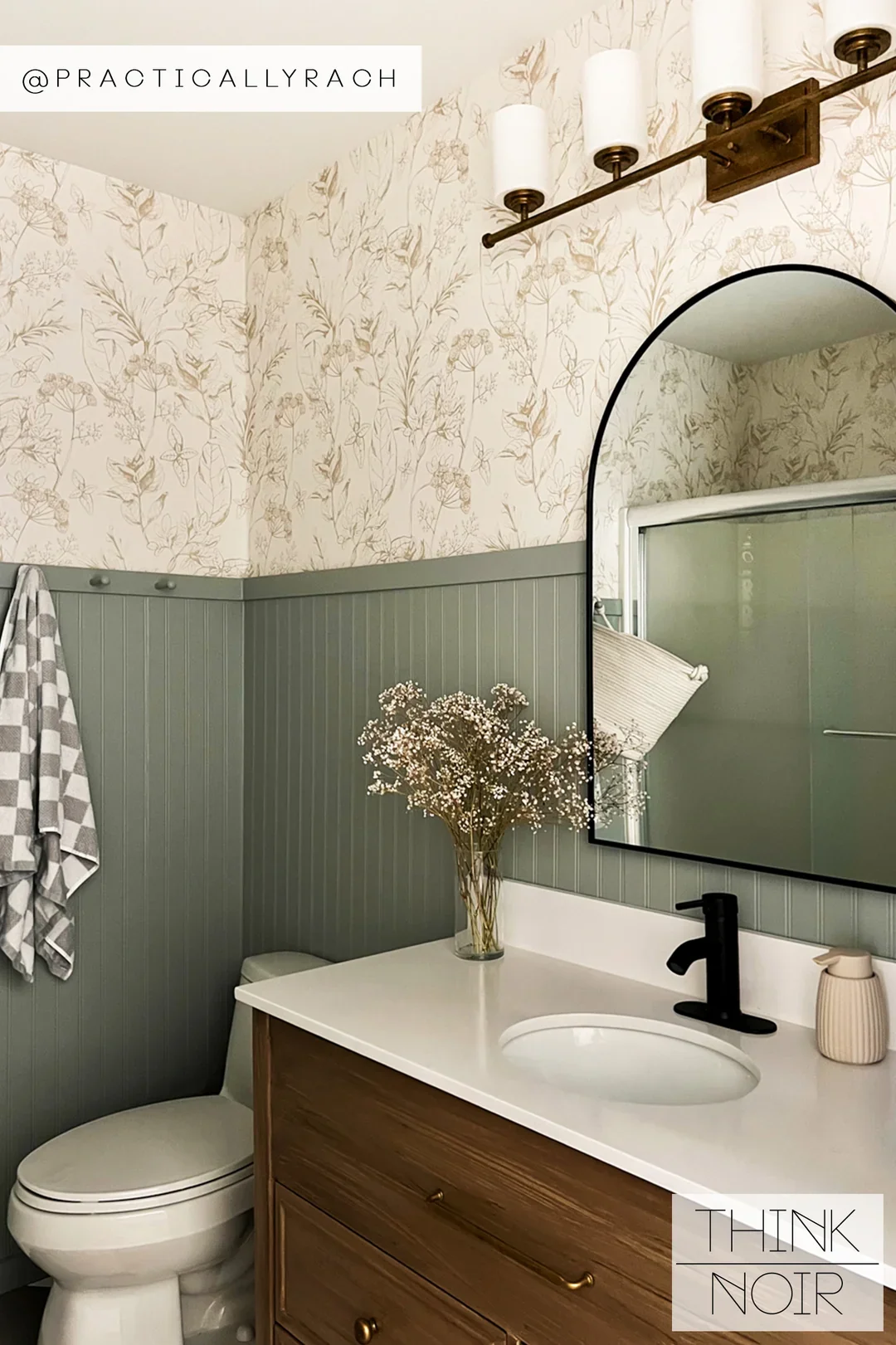
Bathrooms and cloakrooms also work well, as long as you choose a paper suitable for humidity and use moisture-resistant boards for the panelling.
Finish it neatly
The join between wall panelling and paper is where a scheme looks either polished or unfinished. A capping rail or dado moulding along the top of the panelling gives a clean line to paper down to and hides small gaps.
Fit and paint the panelling first, then hang the wallpaper above it. That way you can trim the paper precisely against the rail rather than trying to cut in paint around it afterwards. Fill any nail holes and caulk the joints before painting, as gaps that look small in daylight become very obvious once a strong colour goes on.
Done with a little planning, panelling and wallpaper are a lovely pairing. The panelling gives structure and the paper adds character, and together they can make even a plain new-build room feel as though it has been loved for years.

A simple guide to wooden wall panelling styles…