
Restoring Character in a Period Home: The Design Details That Make the Biggest Difference
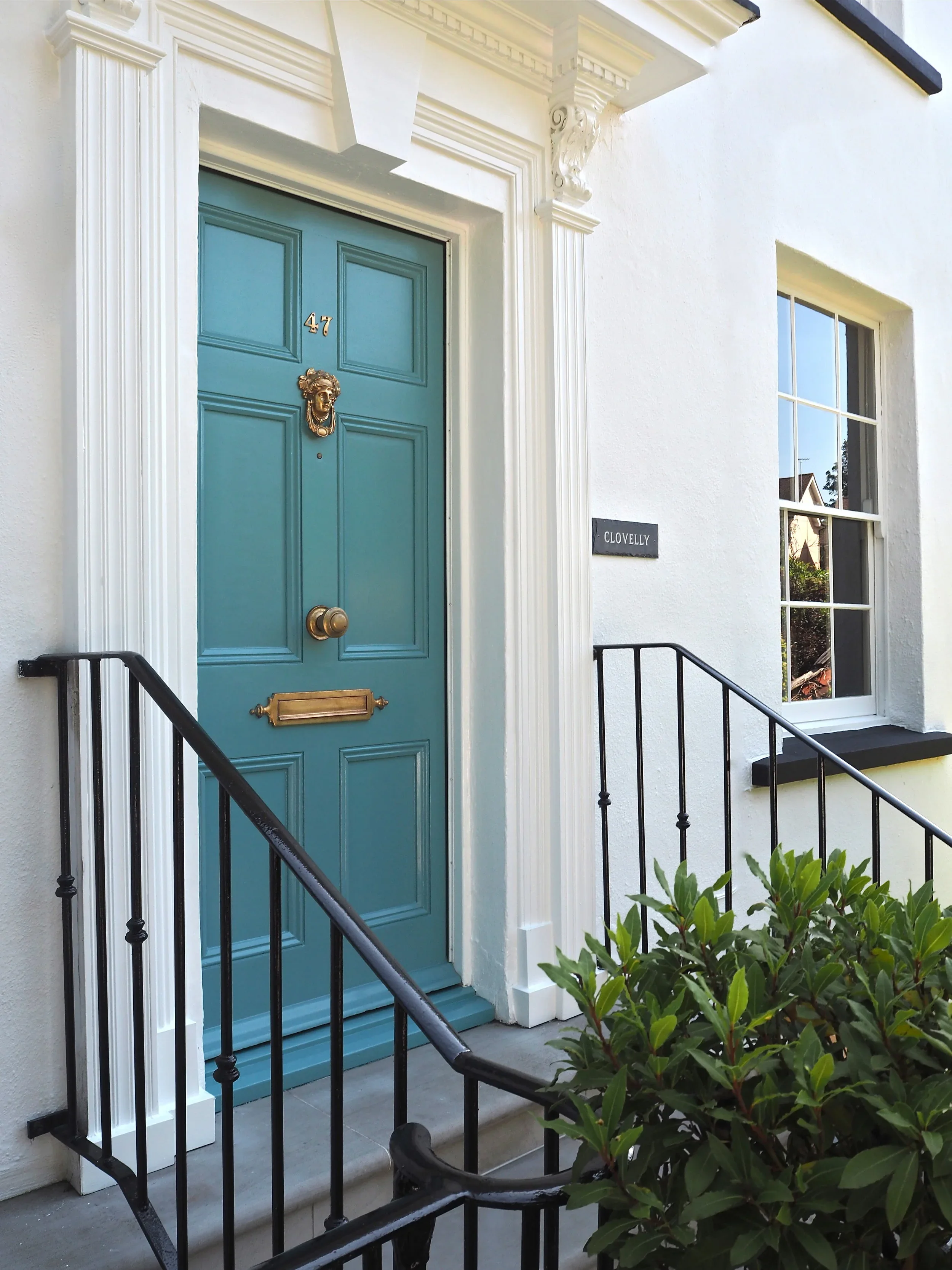
There's a particular feeling you get walking into a period home that's been renovated well. Instead of stark modern updates, the owner has clearly thought about what makes the house special, working with it rather than against it. Cornicing intact, original fireplaces restored, along with doors that close with a satisfying weight.
Getting there isn't always straightforward; period homes come with quirks, planning restrictions, and a temptation to modernise everything for the sake of convenience. However, the homes that feel the most 'right' are usually the ones where the owner has been selective — updating where it matters, preserving where it counts, and choosing materials that respect what was there before.
If you're partway through a period renovation (or just thinking about starting one), here are the design details that consistently make the biggest difference.
Floors That Tell a Story
Original floorboards are one of the most undervalued assets in any period property - they've survived decades of furniture, feet, and interior trends. Original wood flooring carries a warmth and texture that no engineered alternative quite matches. If yours are hidden under carpet, it's always worth pulling back a corner to see what's underneath.
Sanding and finishing original boards is rarely as expensive as people expect, with the final result transforming the feel of an entire room. Where boards are missing or damaged beyond repair, salvage yards are a better source than new timber (reclaimed boards will have a similar patina and grain to the originals, so replacements blend rather than stand out).
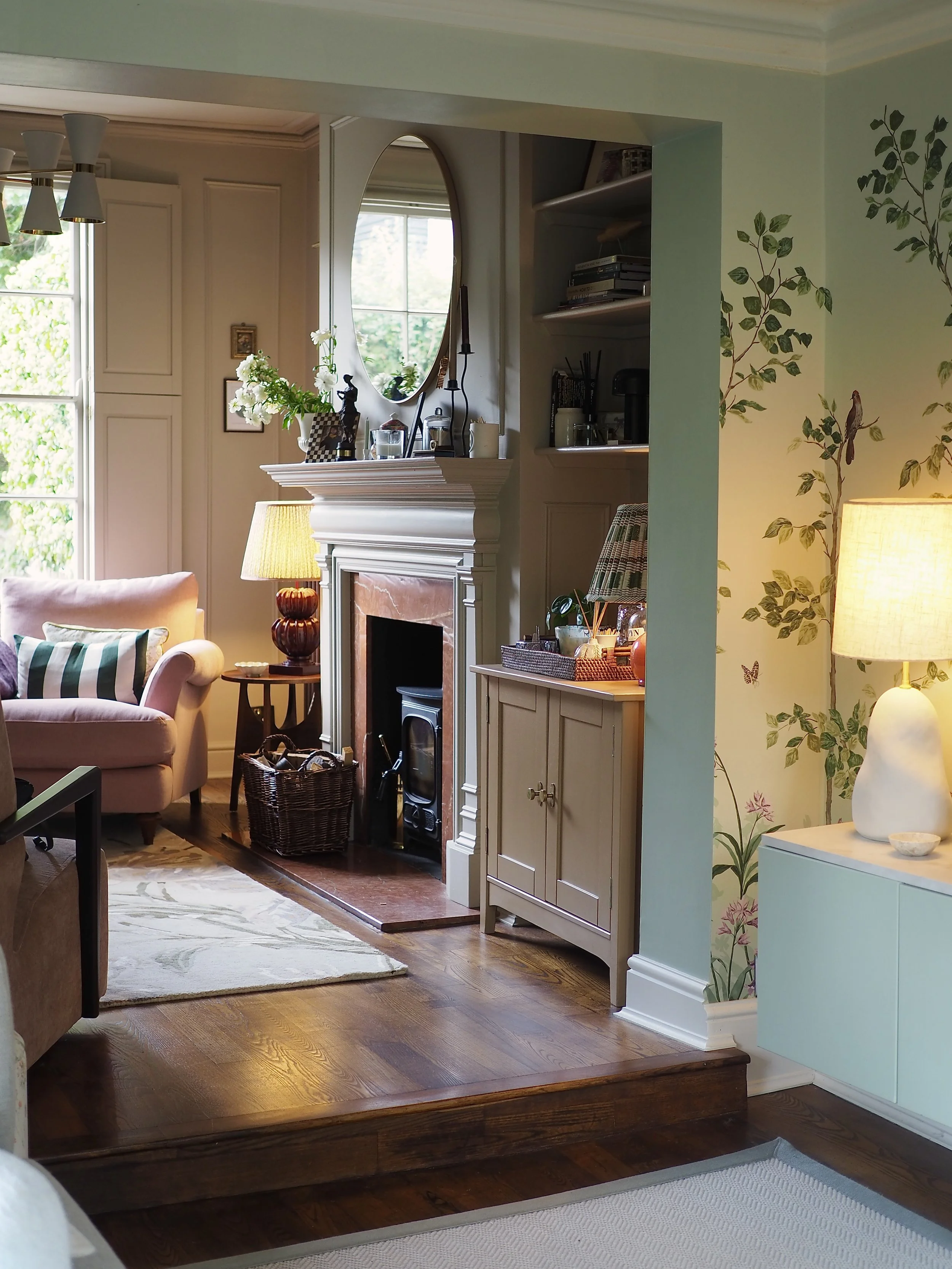
If original boards aren't saveable, consider reclaimed parquet. Victorian and Edwardian homes occasionally had parquet in hallways and reception rooms, with sourcing period-appropriate blocks being simple process. The labour involved in laying and finishing parquet is higher, but the end result is a floor with genuine presence.
The Window Question
Windows are arguably the single most impactful design element in a period home (and the one most frequently compromised). Walk down any Victorian or Edwardian street and you'll spot the uPVC replacements sold to keep noise out (and condensation in!). The proportions are wrong, the sightlines are chunky, and the material reads as obviously modern against original brickwork.
If your home sits within a conservation area, the decision may already be made for you: most local authorities require period-appropriate timber frames for any replacement. Even outside designated areas, the argument for timber is primarily an aesthetic one. The slim profiles of a well-made wooden sash or casement window sit flush with the original reveals in a way that uPVC simply cannot replicate. The material feels right because it is right — it's what was there originally.
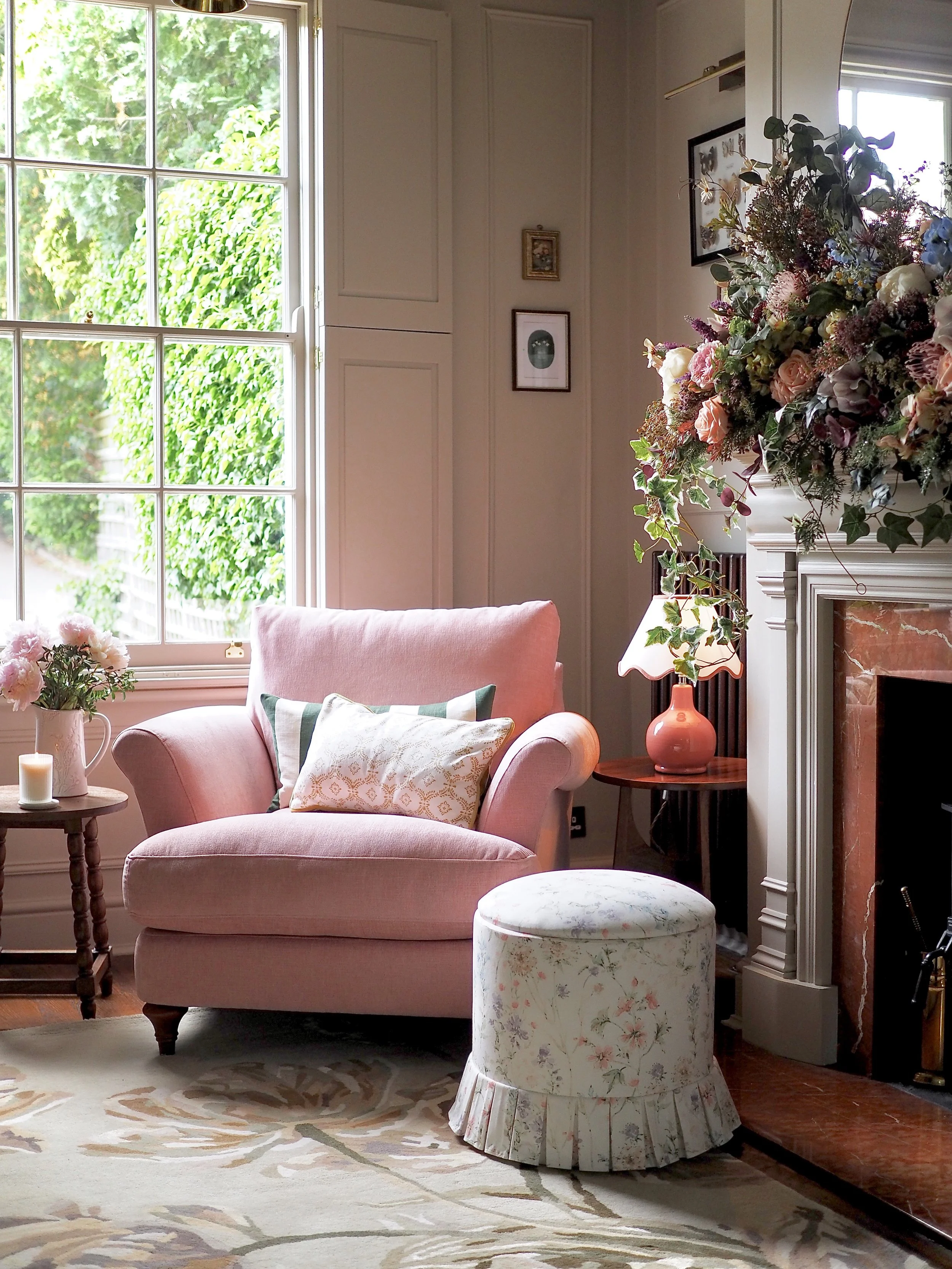
Modern timber windows have moved on significantly from the draughty, high-maintenance frames of twenty years ago. Engineered profiles in laminated pine, meranti hardwood and oak are dimensionally stable and factory-finished with coatings that extend maintenance cycles to a decade or more. Double-glazed units meet current Building Regulations thermal requirements, all while preserving the external proportions that define the period aesthetic. Specialist suppliers now offer made-to-measure wooden sash and casement windows with bespoke sizing that ensures the new frames fit the original openings precisely (no packing, no trimming, and no awkward gaps!)
Hardware and Ironmongery
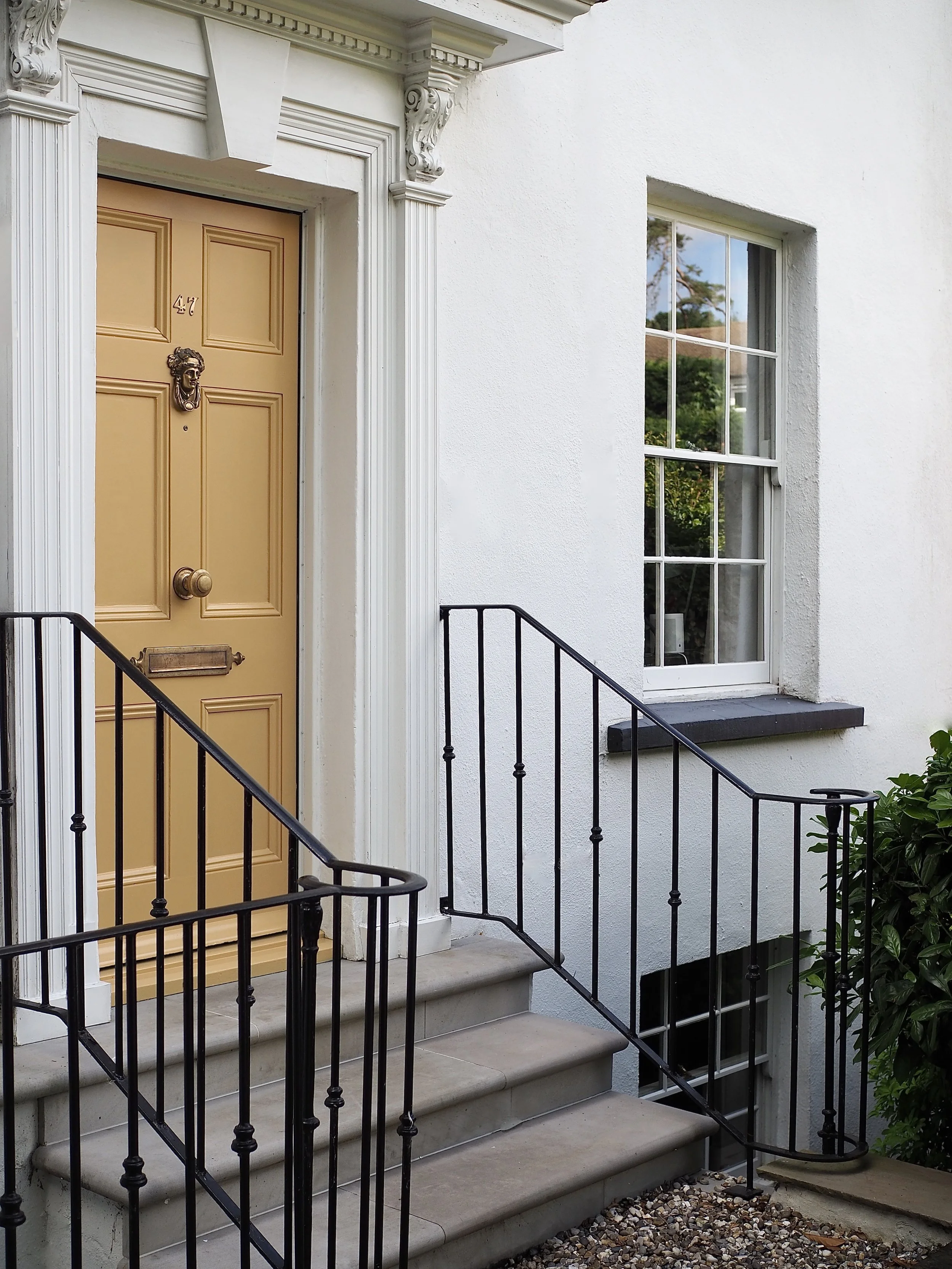
Door handles, window stays, letterboxes and cabinet pulls are small elements that carry disproportionate visual weight. Cheap, modern hardware in a period setting creates the same discordant note as uPVC windows — it whispers 'renovation on a budget' when the rest of the room is trying to say something more considered.
Brass, aged iron, and ceramic knobs were standard in Victorian and Edwardian homes, and architectural salvage suppliers often carry originals. There are also excellent reproduction ranges that faithfully replicate traditional patterns, with the investment modest compared to the visual payoff.
Mouldings, Cornicing, and Ceiling Roses
These are the features that give period rooms their sense of proportion and ceremony. If previous owners removed them, reinstating even a simple cornice and ceiling rose will fundamentally change how a room feels, adding depth, shadow, and a sense of completeness that flat ceilings lack.
Plaster mouldings are available in fibrous plaster (traditional, heavier, beautiful) or lightweight polyurethane (easier to install, surprisingly convincing). For a DIY-confident homeowner, fitting a cornice is a weekend project that delivers results way beyond the effort involved.
Colour as a Period Tool
Heritage paint ranges exist for a reason. Colours like Farrow & Ball's Hague Blue or Little Greene's Lamp Black aren't just fashionable, they're historically grounded. Deep, pigment-rich colours work in period homes because the architecture was designed for them: high ceilings, generous cornicing, and natural light from tall windows all benefit from bold, saturated walls.
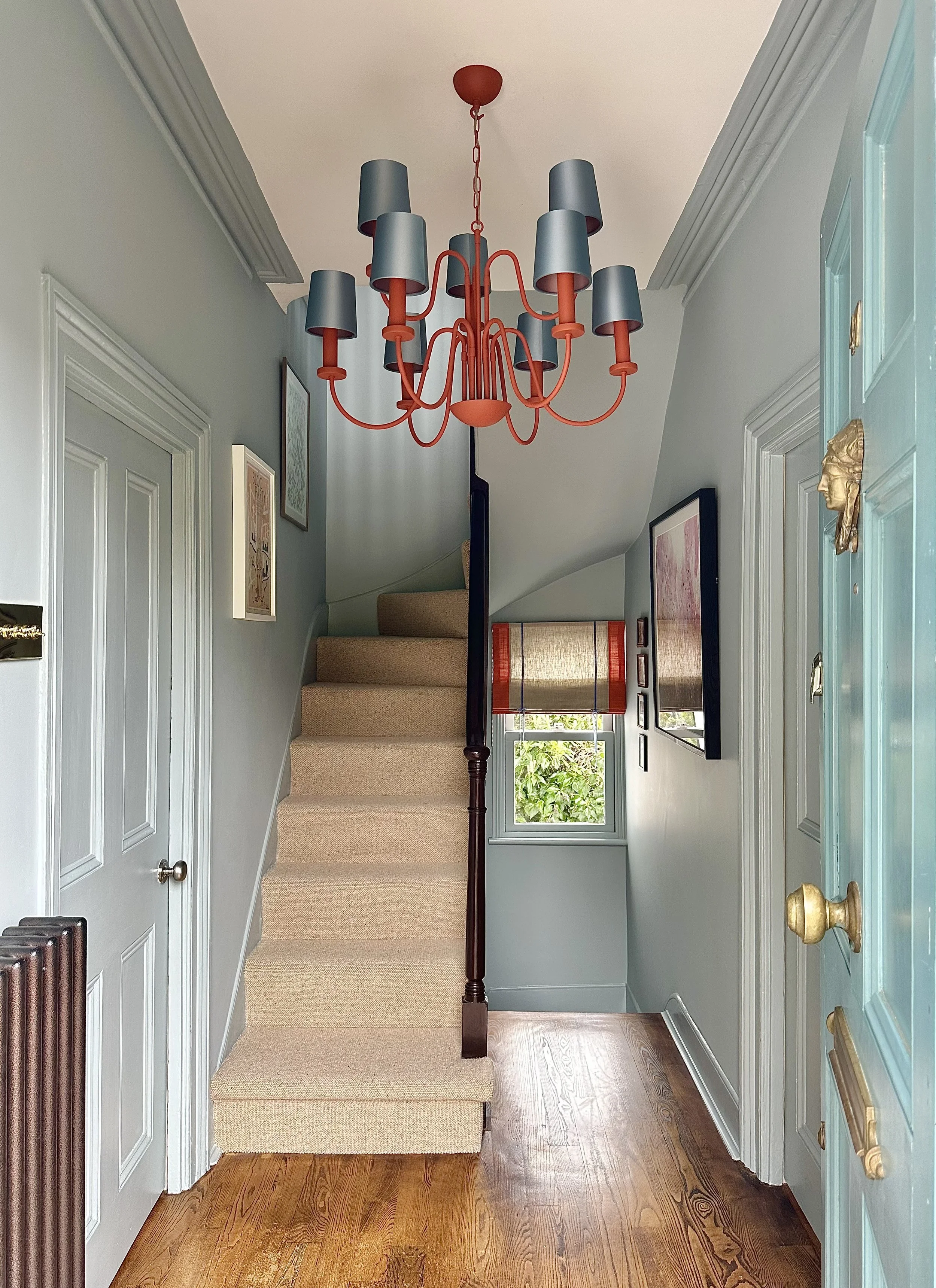
Where modern homes can feel cave-like with dark paint, period homes absorb it beautifully. The trick is not to be timid - a hallway in a deep teal or a dining room in a rich burgundy will make the rooms opening off it feel brighter by contrast (exactly as the original architects intended!)
If you're nervous about committing to a strong colour on all four walls, start with a chimney breast or an alcove. Living with a bold shade in a contained area for a few weeks will usually convince you to extend it further.
Choosing Specialists Who Understand the Brief
Period renovation is one area where the quality of your suppliers and tradespeople matters enormously. A standard double-glazing company will struggle with non-standard openings, arched heads, or weighted sash boxes. A general builder may not understand lime mortar or lath-and-plaster. Seeking out specialists (from plasterers who work with traditional techniques to one UK-based specialist offering bespoke timber windows across multiple wood species) ensures that each element of the restoration is handled by someone who understands what they're working with and why it matters.
The difference shows in the finished result. A period home restored with care and the right materials doesn't just look good — it feels coherent. Every detail reinforces the next, and the house reads as a whole rather than a patchwork of compromises. This coherence is what separates a renovation from a restoration.
My favourite finds at London’s Affordable Art Fair…