
Is a Smart Toilet Worth It for a Family Home?
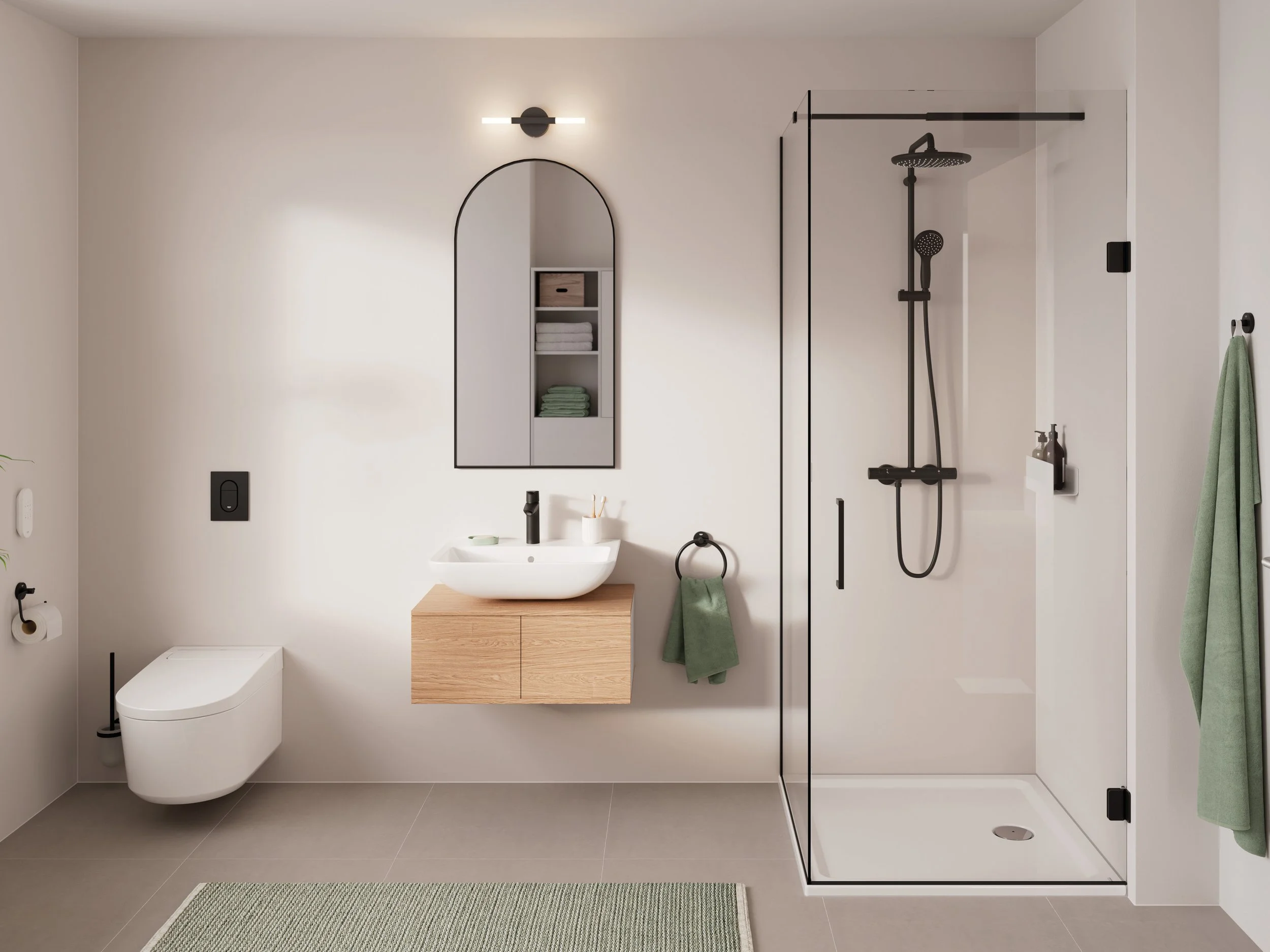
Image credit: GROHE
Featured partner post
Smart toilets have a reputation for being on the expensive side, but for many family homes they’re more useful than expected. While not every ‘smart toilet’ feature is considered to be worth the investment, the biggest benefits have been found to be a cleaner shared bathroom space, easier maintenance, plus everyday comfort. Via multiple smart toilet reviews and real family use cases, it’s apparent that smart toilets make the most sense in busy homes where convenience and hygiene are priority.
What Actually Makes a Toilet “Smart”?
Most smart toilets combine several features into one unit:
Built-in bidet washing
Heated seats
Automatic flushing
Motion-sensor lids
Warm air drying
Self-cleaning nozzles
Night lights
Some models go much further with app controls and customisable user settings (although it was noted that most families rarely use those features long-term).
Why More Families Are Switching to Smart Toilets
One seen as an unnecessary luxury, smart toilets are now more commonplace in regular family homes, often being installed as part of bathroom renovations.
No touching of the toilet required : touchless flushing and built-in bidet cleaning reduce how often people need to touch the toilet, reducing the spread of germs (perfect for a household with kids who often forget to wash their hands!)
Self-cleaning features: while traditional toilets tend to collect mess around the seat, handle and surrounding floor area, smart toilets with self-cleaning features and automatic flushing don’t eliminate cleaning entirely, but they usually reduce the daily buildup.
Heated seats for comfort: Heated seats stop feeling ‘extra’ very quickly! It’s one of those features people joke about until they use it consistently. After that, going back to a cold toilet seat feels surprisingly unpleasant.
Warm water washing: It sounds overly high-tech at first, but many users end up caring more about comfort than the technology itself.
Nighttime bathroom trips become easier: Families with small children or older adults tend to appreciate this more than anyone else, as soft night lighting and automatic lids make late bathroom visits easier without having to turn on harsh overhead lights. It’s a small quality-of-life improvement, but one people often mention after installing a smart toilet.
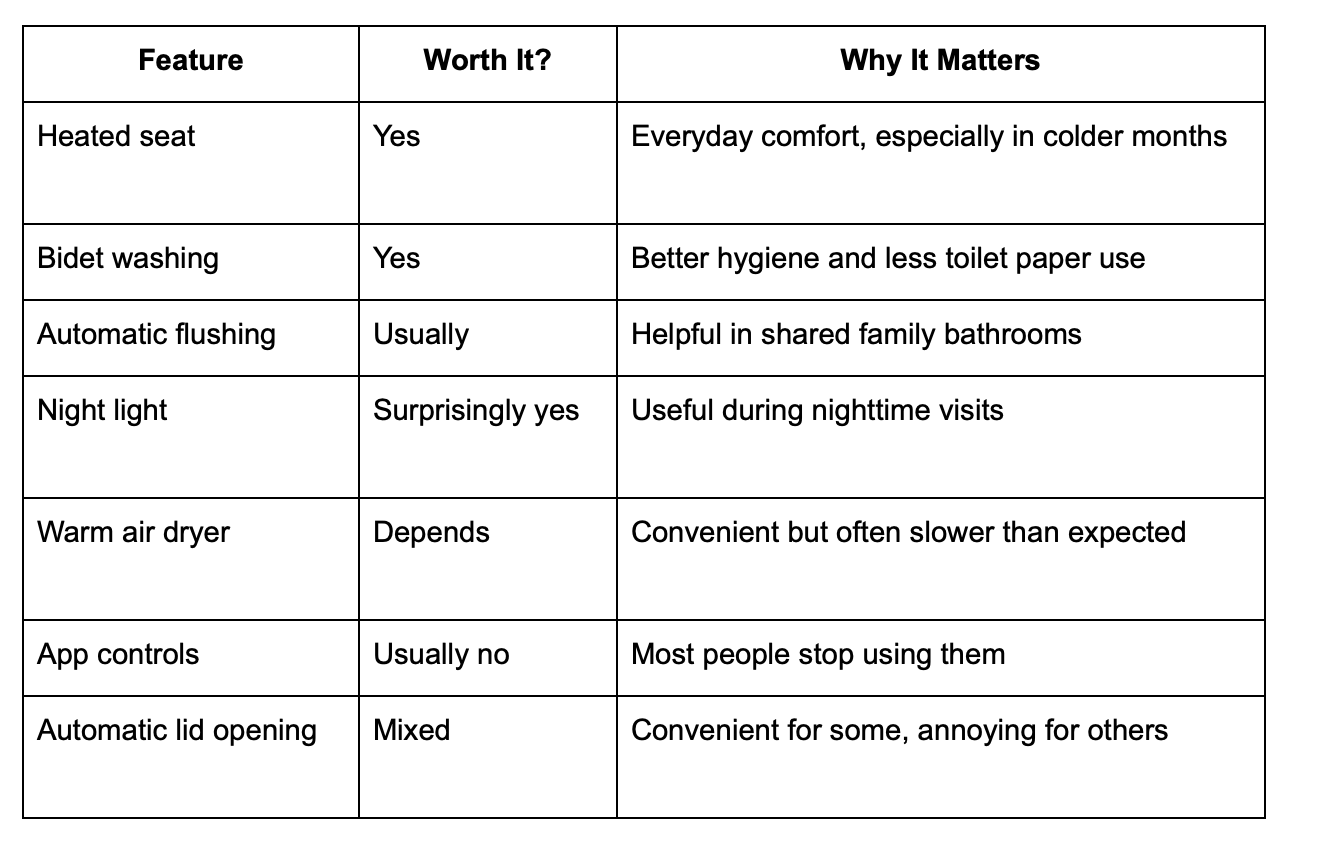
The Features That Actually Matter Most
Some smart toilet functions sound impressive in marketing materials, but rarely change daily life very much:
The Downsides
Smart toilets aren’t perfect, with the weak points usually being the same across most brands:
The upfront cost is high: this is still the biggest barrier - a full smart toilet can easily cost several hundred to several thousand pounds, especially once installation is included and in many cases, a smart toilet seat provides most of the same daily benefits for far less money.
When technology goes wrong: the more features a toilet has, the more things can potentially fail: sensors, automatic lids, dryers and remote controls can all add complexity. While most modern units are reliable, repairs are usually more specialised than a traditional toilet repair.
Water quality matters: homes with hard water may need more frequent cleaning and maintenance around spray nozzles and internal components.
Some features get old fast: in smaller bathrooms, motion sensors can trigger constantly whenever someone walks past; some homeowners love the automation, while others end up disabling it entirely. The same thing happens with overly complicated remote controls - features that feel exciting initially don’t always become part of the daily use.
Is It Worth It for a Family Home?
For many families, yes — especially in homes where multiple people share the same bathroom every day. The hygiene improvements alone can justify the upgrade for some households: heated seats, touchless flushing and easier cleaning tend to provide long-term value because they improve routines people already repeat constantly.
Best for:
Busy family households
Homes with shared bathrooms
Bathroom remodel projects
People focused on hygiene and comfort
Older adults want easier accessibility
Families are already upgrading to more modern bathroom features
Probably Not Worth It For:
Guest bathrooms
Tight renovation budgets
Non tech-heavy consumers
Homeowners that are mainly interested in aesthetics alone
Smart Toilet vs Smart Bidet Seat
A good alternative is a smart bidet seat that installs onto an existing toilet and usually costs far less than a full smart toilet system, delivering many of the priority features:
Heated toilet seat
Warm-water cleaning
Adjustable washing settings
Dryer functions
Improved hygiene
While smart toilets aren’t essential, they’ve moved far beyond being a luxury novelty. This is why more families are starting to see them as a practical upgrade rather than an extravagant one.
How to style your home for Halloween in a way that feels elegant and stylish! Five Halloween decorating ideas to try.