
Keep, Cover, Reupholster or Replace? How to Decide What to Do with a Tired Sofa

Featured Partner Post
There's a moment with every well-loved sofa where you look at it and think: is it time? The fabric has faded on the side nearest the window, the seat cushions have a permanent dip where everyone sits, and there's a mark on the arm that no amount of scrubbing will shift.
However, a sofa that looks tired, threadbare, flat or stained isn't always a sofa that's lifecycle is over. While it’s always tempting to browse for new sofas, if it was well made with quality frame materials, such as hardwoods, then often there are things you can do to bring it back to life.
Check it in the right order (frame, then cushions, then fabric) and the answer to keep, cover, reupholster, or replace? usually becomes clear.

A tired sofa isn't always a finished one
What makes a sofa look worn is mostly on the surface: the fabric, the colour, the cushions. What makes it worth keeping is underneath. If the bones are good, springs, cushions, padding and wadding can be updated. However, if the frame is damaged beyond repair, nothing you do to the surface will last.
Checking the frame
Take the cushions off and have a proper look. Sit on each seat in turn and lean back, then lift one corner of the sofa a few centimetres off the floor.
Listen and feel for creaks, wobbles or a corner that flexes. Check that the legs are firm and the base doesn't sag. A solid, quiet frame is the best news a tired sofa can give you.
seat and cushions
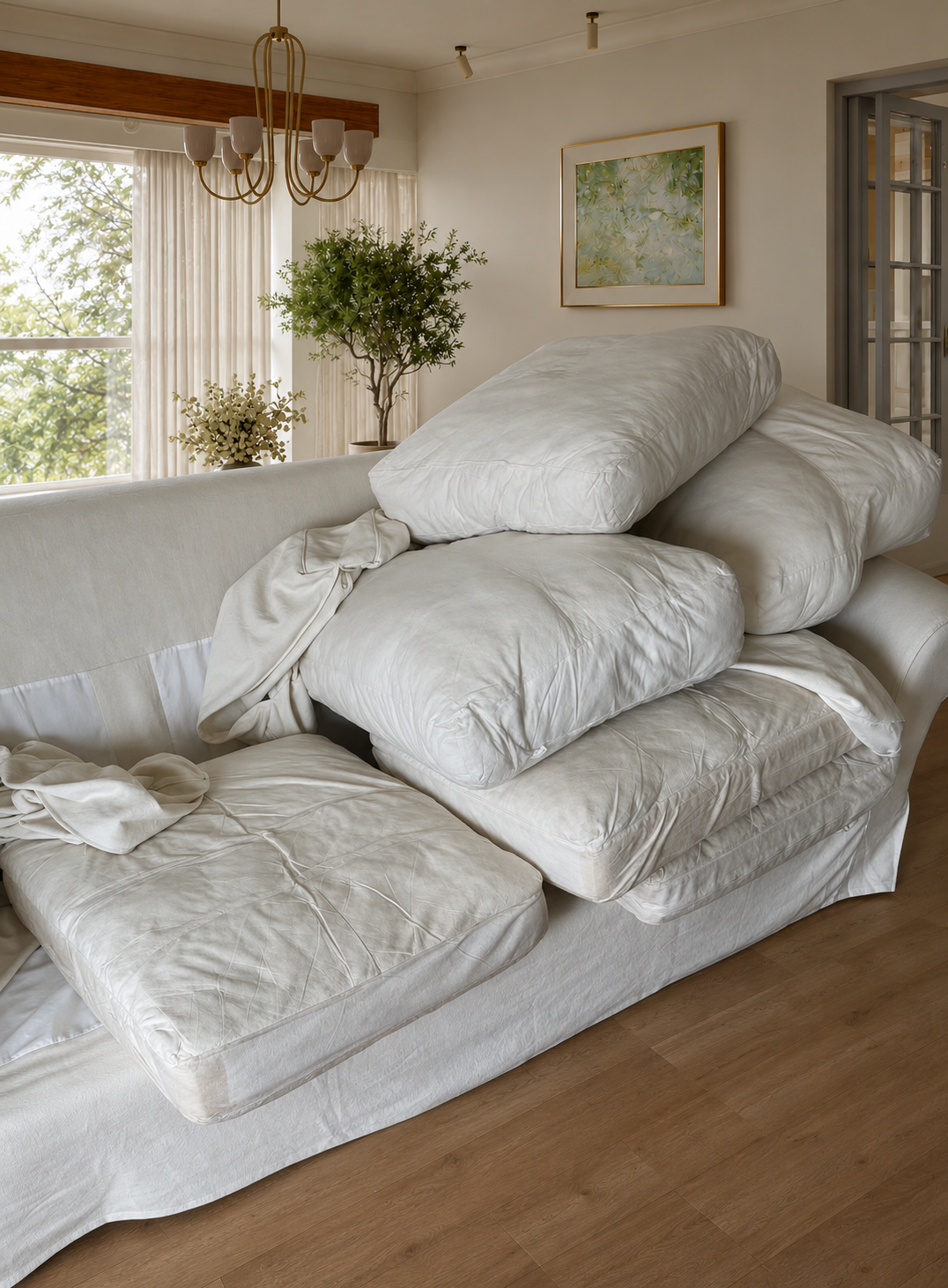
After checking the frame, move onto comfort. Do the seat cushions spring back when you stand up, or stay flat? Can you feel the base through them? Do the back cushions still hold their shape?
The good news is that tired cushions are one of the most fixable problems for a sofa. Foam can be replaced and fibre fillings topped up. Contact a local upholsterer for advice.
the fabric
Now you know the sofa underneath is worth the effort, it’s time to judge the fabric. Start with the sofa's care or cleaning instructions, following the advice before trying any cleaning agents. If the fabric is simply dirty, a simple upholstery clean may be all it needs. However, if certain marks don’t shift and the covers aren't removable, then the fabric will need to be covered or replaced.
Is it fading? Sunlight is hard on any fabric and UV rays will bleach fabrics if they are exposed to daily sunlight through the windows. Patchy fading on one side usually means the sofa sits in strong light, and any new fabric will face the same.
Has it shrunk? If the sofa has removable covers that have been washed, check whether they still fit. Seams pulling out of line, gaps at the corners or zips that no longer close easily are signs a cover has shrunk.
Is it pilling? Little bobbles on the seats and arms are a sign of wear. A fabric shaver can tidy them up, but they tend to come back where the sofa gets the most use.
Replace the cover or reupholster?
If the frame is sound and the cushions are fine (or easily fixed), the fabric is the problem, and you have two ways to change it.
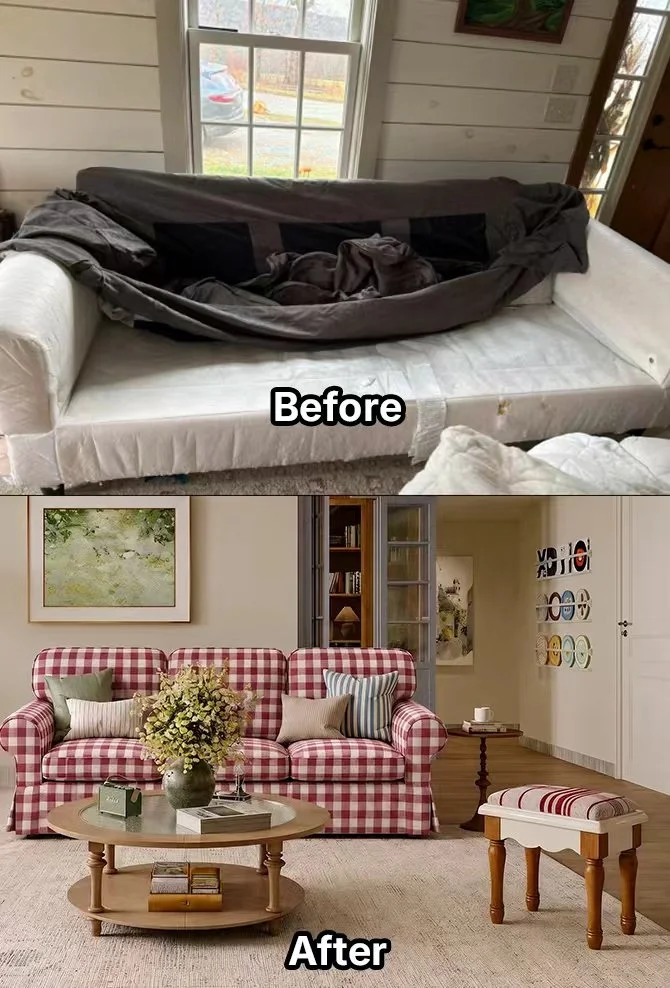
Reupholstery means new fabric fixed to the sofa itself by an upholsterer. It's the right choice when the sofa needs more than a new look: worn webbing, tired padding or a fixed-upholstery sofa with nothing removable. It's a skilled job, so expect it to take time and cost a fair amount of money. You’ll be without a sofa while it is recovered and you’ll also have to pay for the new fabric on top of the labour.
A replacement cover changes the fabric and colour of your sofa without a workshop. It suits sofas that were designed with removable covers, and it can be taken off and cleaned again later, following the care instructions that come with it.
SofaCover Pro makes fitted covers for specific sofa models, including a range for IKEA sofas. If your sofa isn't a standard model, or the original is no longer made, its custom covers start with photos of your sofa and a few details, followed by measuring and approval before anything is cut.
Whichever you choose, check three things first: your sofa's exact model, its measurements and how it's built (which parts are removable and how the cushions are made). Those details decide whether a cover will fit.
When it makes sense to replace the sofa
Sometimes, the honest answer is a new sofa: when the frame is broken and not worth repairing, when frame and cushions are both worn out, or when the sofa no longer suits the way you live.
If you do replace it, give the old one the best chance of a second life. Keep the sofa's original permanent fire label attached, and check the current GOV.UK guidance before you sell or donate it (this label stays on the sofa itself and is separate from the care instructions for washing a cover).


Check out these five brands I loved at Decorex…