
How to Use Bathroom Mirrors to Elevate Your Bathroom Design
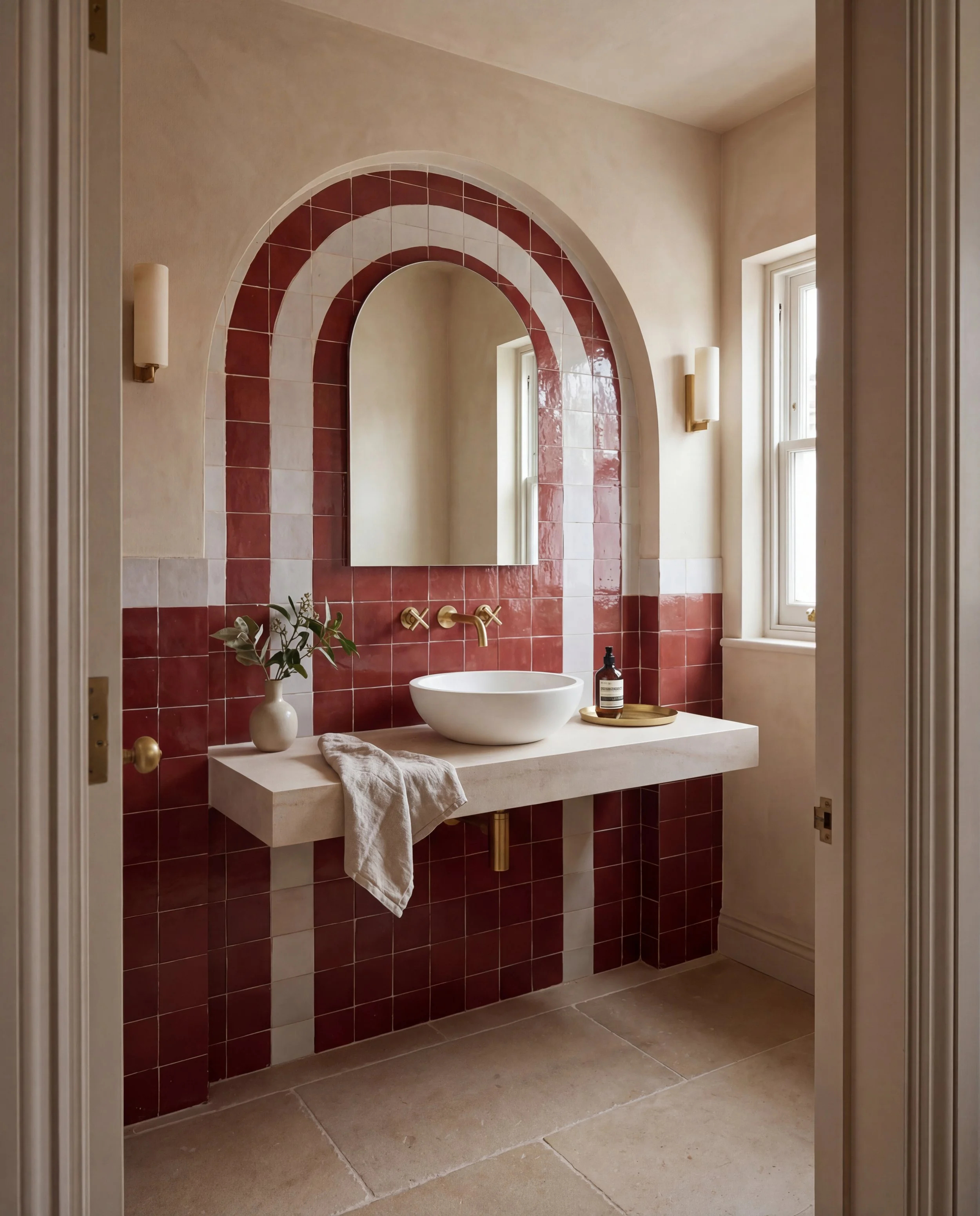
Image credit: Baked Tiles
Co-Written Featured Partner Post
You can inject all the ‘good’ things into a bathroom: stylish tiles, a statement vanity unit, high-end fixtures, yet it’s often the ‘final touches’ that pull a bathroom scheme together. Rather than being considered as just a practical, functional item, a well-chosen bathroom mirror should also be a focal point within the room, bounce around light, balance out lower-level fixtures and elevate the decor scheme. The size of the mirror and its shape (and if it has a frame) also impacts the final ‘look’ of the space.
Here are a number of ideas on how you can elevate your bathroom using mirrors:
Start With the Vanity
If you have a vanity unit as part of your bathroom design scheme, it’s important to think of both the vanity and the mirror as a pair. Both the mirror and the vanity need to be in proportion, as a mirror that is too small above a wide vanity can make each piece feel disconnected from each other. At the same time, a very large mirror can feel imposing over a smaller vanity unit.
For a standard 48 inch vanity with one sink you could try:
One wide mirror the width of the vanity to make the most of the wall space and elongate the room.
One large statement circular mirror directly above the sink (80-100cm circumference)
For a double vanity:
One wide mirror creates a clean, continuous look.
Two individual mirrors give each sink its own defined space.
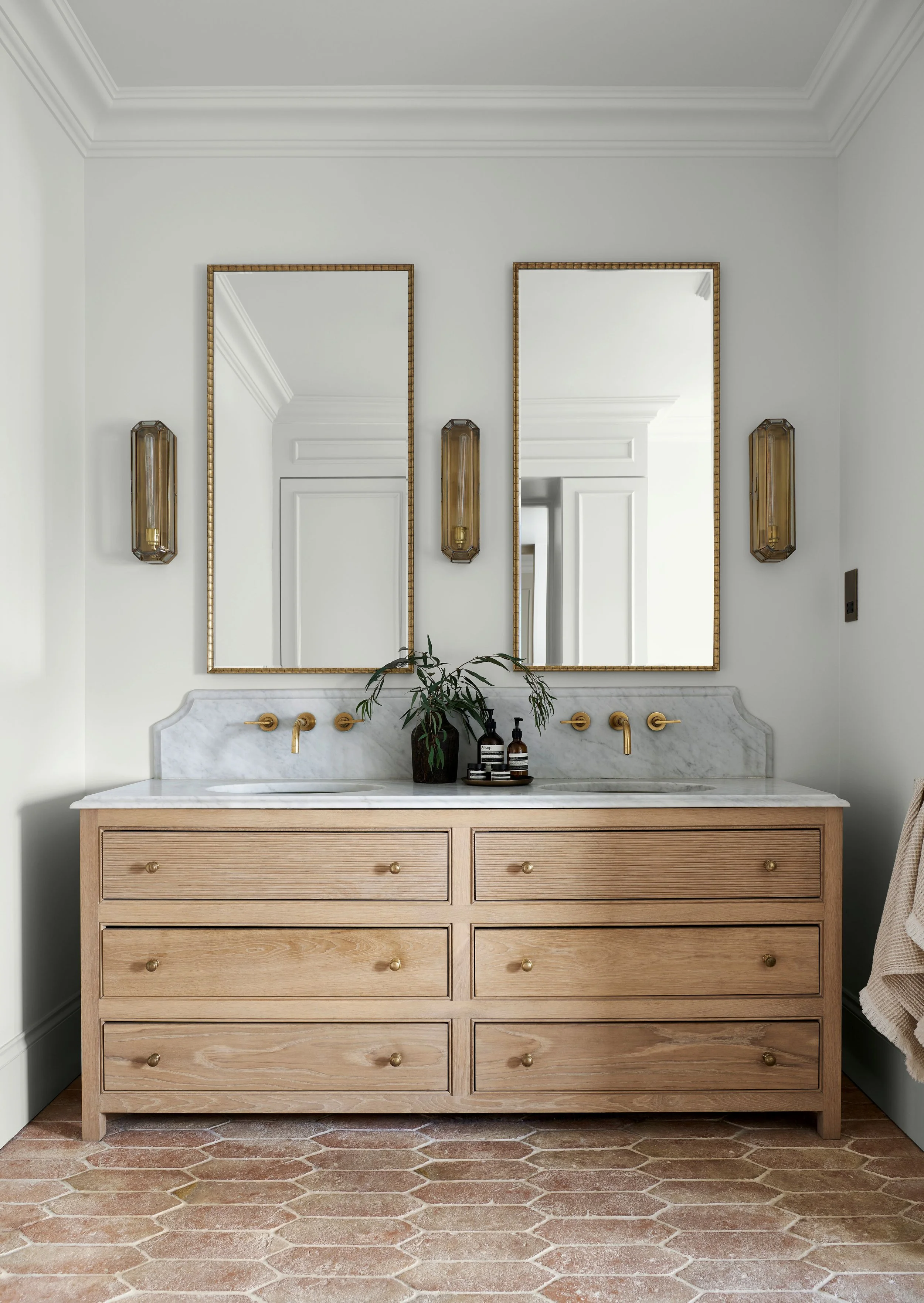
Image credit: Graham & Brown
Consider the shape & Frame
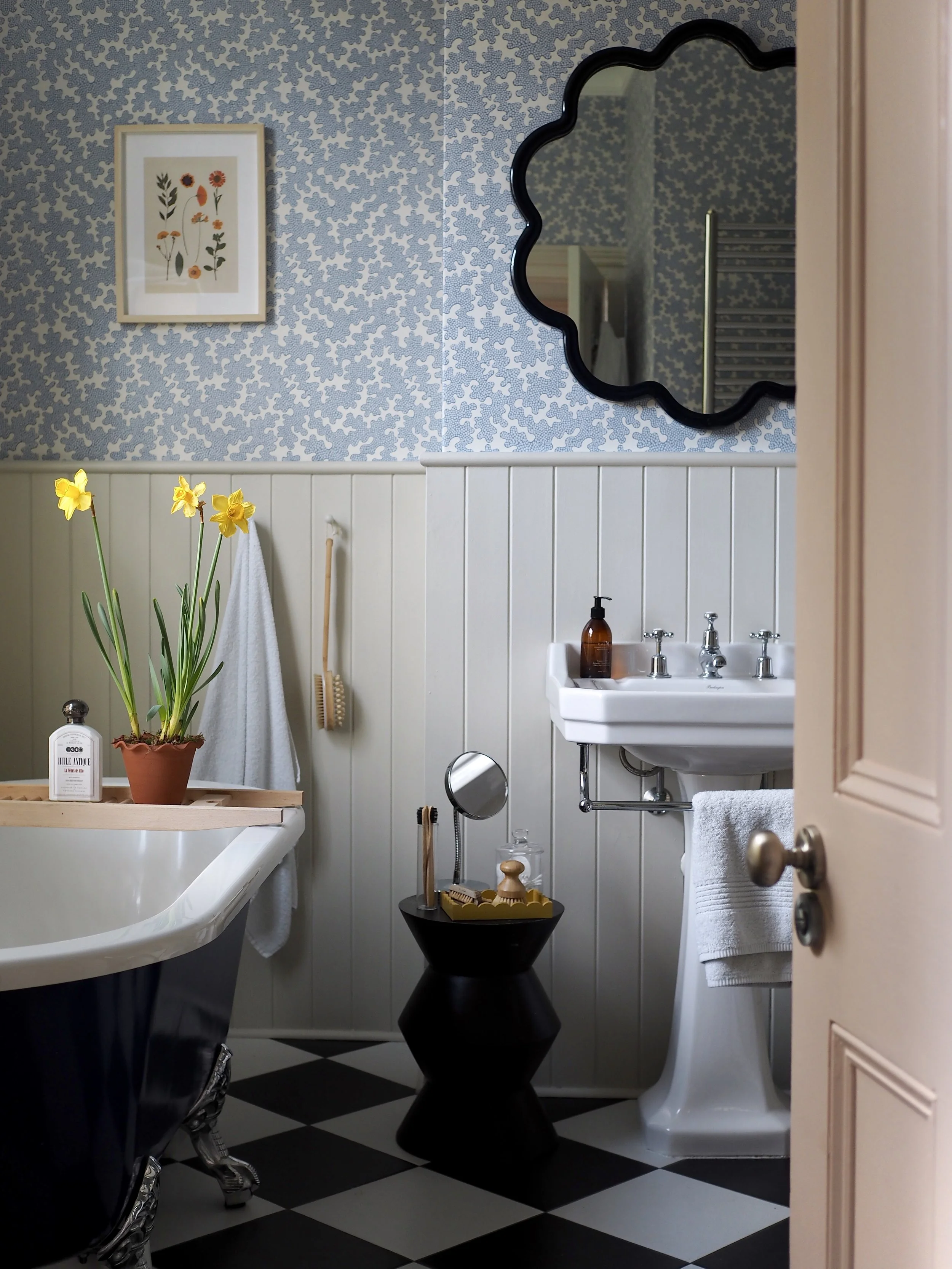
There are so many modern options for mirrors around these days, your bathroom mirror need not be square, circular, or contain a simple frame. Wavy-edged or scalloped edge mirrors can soften a bathroom, while bamboo or bobbin lacquered mirrors add detail and interest to sterile spaces. You could also try ribbed-detail or colourfully-framed mirrors to add character and personality to your bathroom.
Use Reflection to Make the Bathroom Feel Brighter
Mirrors can be especially useful when a bathroom doesn't get much natural light. Try to position your bathroom mirror opposite a light source so that it captures and reflects light, bouncing it around the space and creating a stronger sense of room depth. This works particularly well in compact spaces, where a generously-sized mirror above a simple vanity will visually open up a wall and prevent the space from feeling too enclosed.
Reflect the best parts of the bathroom
When you position your mirror, think about what’s opposite, as that is what you will see every time you look in it! Chances are that you’ll want to see some art you’ve hung or some decorative wallpaper as your mirror backdrop, rather than a towel rail stuffed full of wet towels! It might not be something that you first think about when deciding where to hang your bathroom mirror, but it could become a daily annoyance going forward.
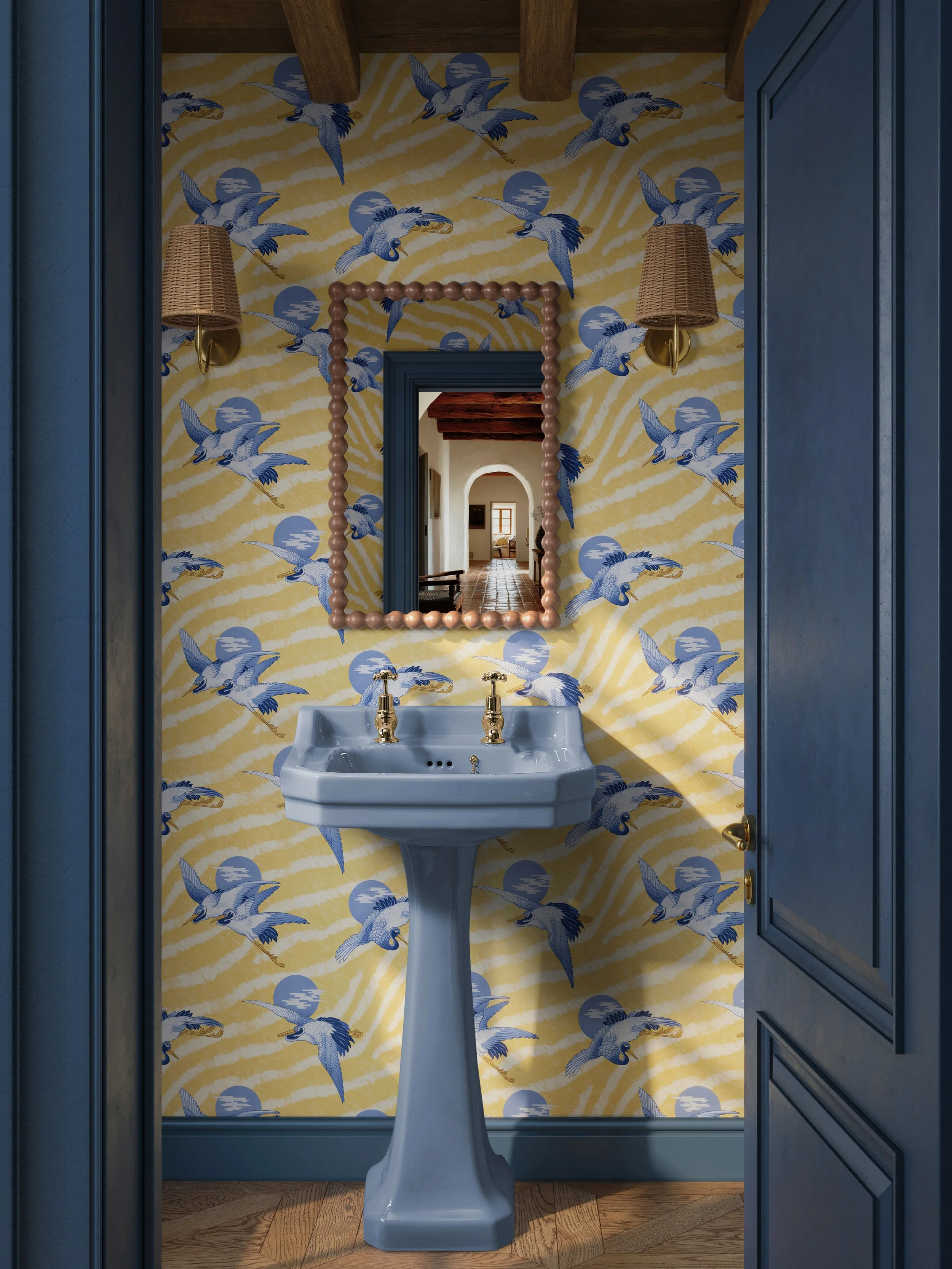
Image credit: Divine Savages
Mirrors for Modern Bathrooms
Clean lines and simple shapes usually work well within modern bathroom spaces. A frameless bathroom mirror can blend easily into the wall, while an LED design can add useful extra lighting without introducing another fixture. To add warmth to a modern bathroom, try incorporating wood or textured finishes to mirror edging.
MIrrors For Traditional Bathrooms
A framed mirror adds to the character and definition of traditional bathroom schemes. Contrasting finishes add character while chunky frames add style and elegance.
Lighting Around A Bathroom Mirror
Interior designers will often stress the need to not install harsh, overhead spot lighting within bathrooms, but instead focus on softer task lighting, such as wall lights and LED lighting. The reason for this is that overhead lighting leaves shadows on the face and will make the room feel cold and sterile. As an alternative, try these lighting options around your bathroom mirror:
Wall sconces either side of a mirror: this is a great way to add charm into a bathroom, as well as pattern and texture if you choose fabric shades. If the mirror you’ve chosen also looks a little lost on the wall, sconces either side will balance it out and make the wall less empty.
Lighting above the vanity: for task lighting focused in one area
A backlit or front-lit mirror: when space is at a premium and you want focused illumination without adding several separate fixtures.
Important: Any lighting can be added into a bathroom as long as it has an IP44 rating when being used around a basin (other bathroom zones, such as shower enclosures, will require different ingress protection ratings).
Don't Forget How the Mirror Will Be Used
While the design and style is important, practicality needs to be considered when choosing a bathroom mirror as the piece needs to work as part of everyday living. Consider the following:
Is it comfortable to use from the main standing position? Can you see in it without standing on your tiptoes, or crouching down?
Does it provide enough visibility for everyday use?
Will the placement interfere with other elements of the bathroom?
Does it make sense for everyone within the home?
You may also want to consider storage. In a busy family bathroom, a mirrored cabinet can provide a convenient place for everyday essentials while keeping the vanity area tidy.
When the bathroom mirror is treated as part of the design rather than simply a functional necessity, it can become one of the easiest ways to make a bathroom feel more finished and intentional.
These six kitchen paint colours are a great choice for cabinets…